
Are Plywood Cabinets Worth It? A Buyer's Guide
Last Updated: October 30, 2026
Quick Summary
Plywood cabinets are usually worth it when boxes must carry shelf loads, hold hardware firmly and resist moisture over a long service life. They cost more upfront than particleboard, so the premium matters most for heavy daily use, rentals and humid rooms.
Plywood holds screws better than MDF or particleboard because its layered grain gives fasteners more material to grip.
Typical cabinet box panels run about 15 to 19 mm, and thickness and grade affect both strength and price.
Particleboard is the least expensive option but is more prone to sagging and swelling after water exposure.
Ask for panel grade, thickness and edge treatment in writing, and compare quotes on identical specifications.
Seal all exposed plywood edges to limit moisture entering the layers and extend the box's lifespan.
Table of Contents
Choosing cabinet boxes is one of the bigger material decisions in a kitchen or renovation project, and plywood cabinets come up in almost every conversation. At PROJECTA Supply, we supply cabinetry and flooring, and plywood, MDF and particleboard are compared often in the projects we support. This guide explains what plywood cabinets are, where they outperform, where they fall short, and how to decide whether they are worth the investment for your project.
Plywood is built from thin layers of wood veneer, each glued at a right angle to the one beneath it. Browse our cabinet box material options to compare them for your specific use. That cross-grain construction is the reason it holds screws well and resists the sagging and splitting that affect simpler panels. The sections below work through the decision in practical terms.
Why Plywood Is the Usual Choice for Cabinet Boxes
Plywood has become the default for cabinet carcasses because it balances strength, weight and cost better than most alternatives. Many cabinet makers standardize on it for the box itself, while using a different material for doors or face frames.
The appeal is practical. A plywood box can carry shelf loads for years without bowing, and it accepts fasteners and hinges reliably. For a developer fitting out multiple units, that consistency matters as much as any single feature.
Plywood is not automatically the best choice for every application, though. Its value depends on grade, panel thickness and how the box is assembled. We cover those details below so you can judge the material on its actual merits.
How Plywood Cabinet Boxes Are Built
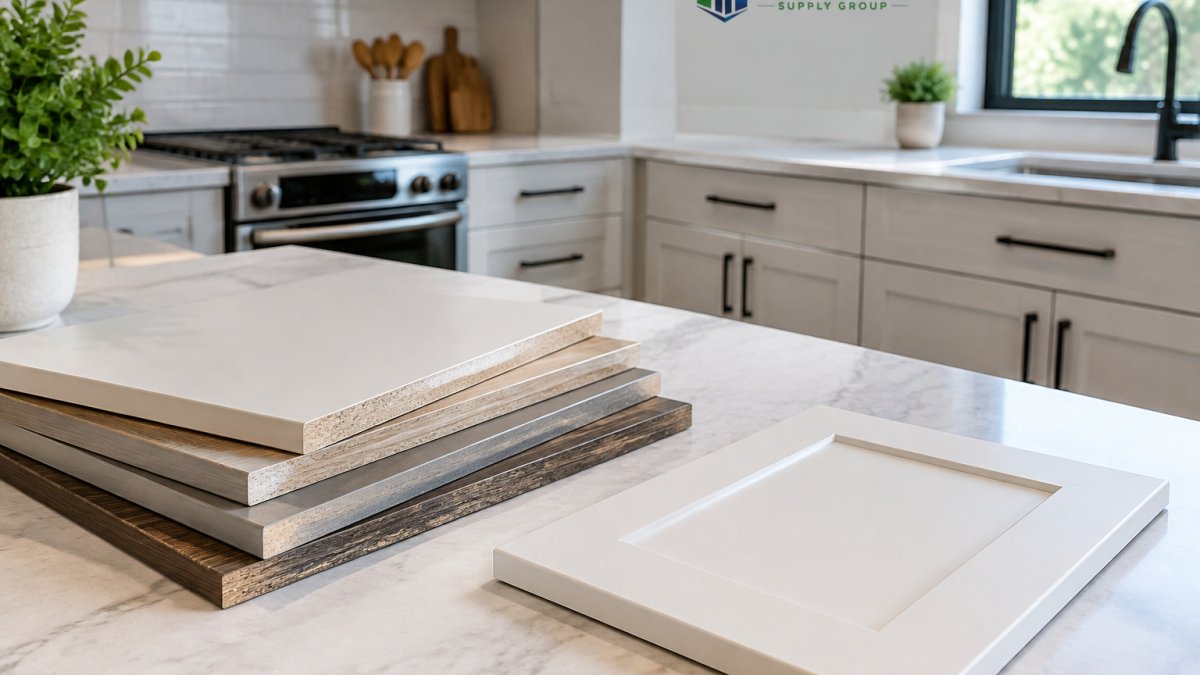
A cabinet box is usually made from panels of roughly 15 to 19 mm plywood, joined with screws, dowels or glue and sometimes reinforced with a back panel. The construction method often matters as much as the panel itself.

Grade is the first thing to check. Cabinet-grade plywood has fewer internal voids than cheaper sheet stock, and those voids are where weak spots begin. Ask for the grade and the core construction before you order.
Edges deserve attention too. Exposed plywood edges need edge banding or a finish, both to look clean and to limit moisture entering the layers. A well-built box with sealed edges will outlast a poorly finished one made from better panels.
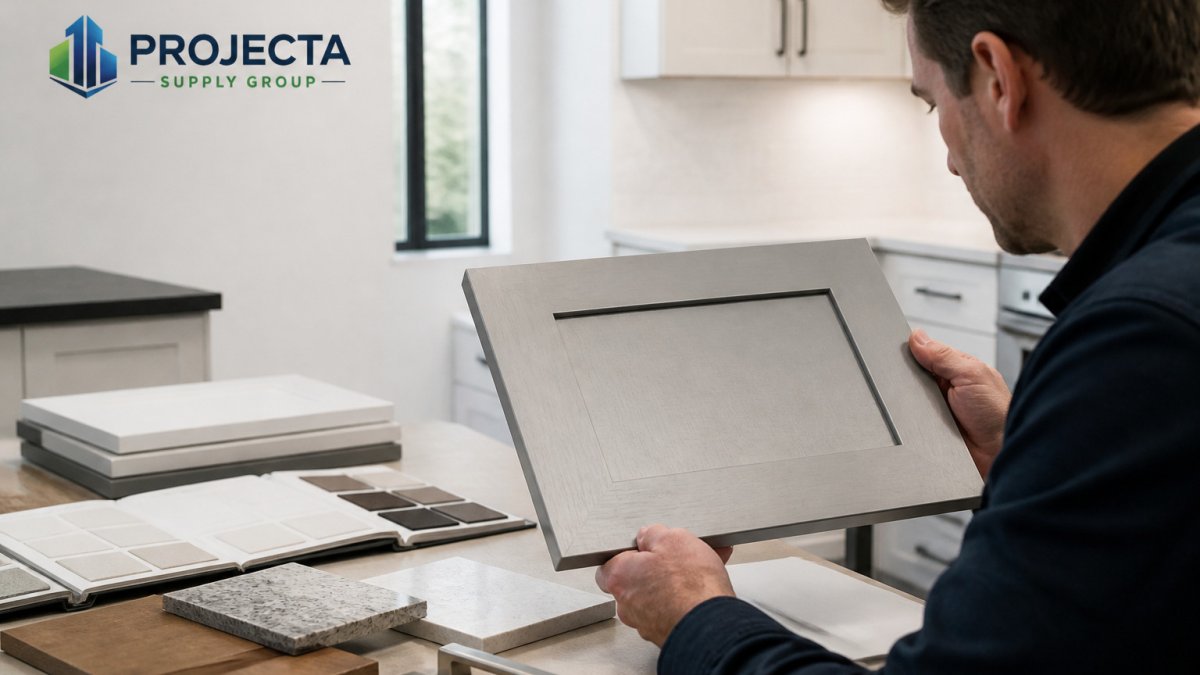
Inspect a sample box before committing to a large order. Look for clean joinery, consistent panel thickness and sealed edges.
Plywood vs MDF Cabinets: Strength, Moisture and Screw Holding
MDF, or medium-density fiberboard, is a dense, uniform panel made from wood fibres bonded with resin. It machines smoothly and takes paint well, which makes it popular for painted doors and decorative panels.
Plywood generally holds fasteners more securely than MDF, because its layered grain gives screws more material to grip. Screws driven into MDF edges can strip out under repeated load.
Moisture is where the comparison gets more nuanced. MDF swells and loses strength when it absorbs water, and repair is difficult. Plywood tolerates humidity better than MDF, though prolonged exposure to water can still damage it. Sealing all surfaces, including cut edges, is the practical defence for either material.
Plywood vs Particleboard Cabinets: Durability and Long-Term Value
Particleboard is the least expensive of the three common options. It is made from wood chips and resin, which keeps the material cost low but limits its performance over time.
In most installations, particleboard boxes are more prone to sagging under shelf loads, and they hold screws poorly once the panel has been drilled more than once. Moisture is a serious weakness: particleboard can swell and crumble after water exposure.
Plywood typically costs more upfront than particleboard, and pricing depends on grade, thickness, quantity and delivery. You can explore our flooring range alongside cabinetry when planning a project. Whether that trade-off makes sense depends on how long you need the boxes to last.
Best Material for Kitchen Cabinet Boxes by Use Case
The right material depends on how the space will be used. A short list of common scenarios helps narrow the choice.
Rental apartments: Plywood boxes handle frequent use and tenant turnover well, and they are easier to repair than particleboard.
Custom homes: Plywood suits owners who want a long service life and firm hardware mounting.
Painted-finish kitchens: MDF doors paired with plywood boxes give a smooth painted surface without the full cost of solid wood throughout.
Tight budgets with light use: Particleboard can work in low-traffic spaces, but expect a shorter lifespan.
Humid areas such as laundry rooms: Plywood with sealed edges performs better than MDF or particleboard.
Mixing materials across a project is common and sensible. Many developers specify plywood for boxes that carry load and moisture-prone doors in a separate material, which keeps costs manageable.
Is the Extra Cost of Plywood Justified?
The short answer is that plywood usually costs more upfront than particleboard, but the premium varies by grade, panel thickness, cabinet size, and order volume. For current prices or a quote, see the PROJECTA Supply website.
Plywood cabinet boxes are commonly made from 15 mm to 19 mm panels, and thicker panels and higher grades with fewer voids generally cost more.
The quoted price for a cabinet box should specify what is included: the panel material and thickness, edge banding, back panel, joinery method, and hardware mounting provisions. A low quote that excludes edge sealing or uses a thinner back panel is not a like-for-like comparison. Ask for a breakdown that lists the box material separately from doors, finish, and installation.
To judge whether the premium is justified, consider the life-cycle cost. Plywood resists sagging and screw pull-out better than particleboard, which means fewer callbacks for sagging shelves or loose hinges. In rental units or high-use kitchens, that reliability translates into lower maintenance and replacement costs over time. For a short-term project with light use, a lower-cost material may be adequate, but the savings should be weighed against the expected service life.
A practical approach is to request quotes for the same cabinet layout in plywood, MDF, and particleboard, with identical specifications for thickness, edge treatment, and hardware. Learn whether requesting a materials quote is worth the effort before committing. Compare the total project cost, not just the box material. Then factor in the expected lifespan and repair frequency. The plywood premium is often worth weighing when cabinets are expected to face heavy daily use over a long service life. To match specifications to your budget and needs, you can book a project consultation.
Pro Tip When comparing quotes, ask each supplier to confirm the panel grade, thickness, and whether edges are sealed at the factory. A written specification prevents substitutions.
Ultimately, the extra cost is justified when the cabinets must perform under load and moisture over a long period. For light-duty or temporary installations, the premium may not pay back. The key is to make the comparison on equal specifications and to consider the full cost of ownership, not just the initial price.
Checking Cabinet Box Material Before You Order
Before you commit to an order, verify the cabinet box material rather than relying on marketing claims. You can review our engineered product line to confirm the specifications of what you are buying. A few practical checks can prevent receiving a box that looks right but is built from a weaker core.
Start with the specification sheet. Ask for the panel material, thickness, grade, and core construction in writing. For plywood, confirm the number of plies and whether the core is solid or has voids. Cabinet-grade plywood should have a veneer face and a core with minimal voids. The thickness should be stated; common thicknesses are 15 mm, 18 mm, and 19 mm. Also ask about the back panel material and thickness.
Inspect a sample or an exposed edge. Look for gaps or voids between the plies. A high-quality plywood will have tight, consistent layers. Check the edge banding: it should be firmly applied and sealed. If the edge is raw, moisture can enter the plies. Run your hand along the edge to feel for delamination or rough spots.
Ask how the box is joined. Screws, dowels, and glue are common. Confirm that the joinery method is appropriate for the material. For plywood, screws hold well, but pre-drilling may be needed to avoid splitting. Also ask about hardware mounting: are there solid wood or plywood blocking strips where hinges and drawer slides attach? This is critical for load-bearing.
Ask the supplier whether a sample box is available for inspection. Open and close doors and drawers to feel for rigidity. Check that shelves are adjustable and that the box does not flex. Look inside the cabinet for a finished interior; unfinished interiors can be a sign of cost-cutting.
Put everything in writing on the purchase order. Specify the material, thickness, grade, edge treatment, and back panel, and require approval for any substitutions.
Watch Out Do not accept verbal assurances. A written specification is your only protection against material substitution.
Finally, compare quotes on an apples-to-apples basis. If one quote is significantly lower, check whether it uses a thinner panel, unsealed edges, or a lower grade. The cheapest quote may not be the best value if the box fails prematurely. By following these steps, you can confirm the box material and make an informed decision.
Frequently Asked Questions
What's better for cabinets, MDF or plywood?
Plywood generally performs better for cabinet boxes. Its cross-grain layers hold screws more firmly and resist sagging under shelf loads, and it handles humidity swings with less swelling than MDF. MDF offers a smooth, paint-ready surface and is often the better choice for doors and flat panels where edges are routed and painted. For cabinet boxes that will carry heavy dishes or see regular moisture, plywood is the safer material.
Do plywood cabinets hold screws better than particleboard?
Yes. Plywood's layered construction gives screws more material to grip, so hinges, drawer slides and shelf supports stay tight over years of use. Particleboard has no layered grain, and screws can strip out, especially after repeated adjustment. When you compare quotes, ask what panel material the cabinet box uses, not only the door material, because the box carries the structural load.
Are plywood cabinets worth the extra cost?
Many kitchens and multi-family projects weigh plywood's cost against its structural properties when choosing a box material. The price difference depends on the supplier, panel thickness, quantity and delivery, so get current pricing from PROJECTA Supply's website or a written quote rather than relying on general estimates. Compare like-for-like box specifications when you evaluate offers.
How can you tell if a cabinet box is made from plywood?
Look at the exposed edge of a box panel or the back of a removed shelf. Plywood shows thin visible layers of veneer with alternating grain direction. MDF and particleboard show a uniform, fibrous or chipped core with no layers. Ask your supplier to confirm the box material in writing, and check that the specification matches what is delivered before installation.
Comments